Every facility has unique heating demands. We organize our heat pump solutions around your specific application so you can quickly identify the right system, capacity range, and configuration.
Talk to a Solutions Engineer
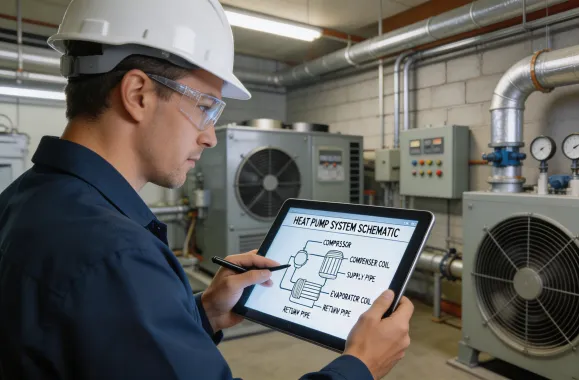

Select your application to see recommended system types, capacity ranges, and typical performance data.
Space heating, cooling, and domestic hot water for offices, retail, and mixed-use properties. Air-source heat pumps typically achieve payback within 3-5 years for buildings under 10,000 m2 due to lower installation costs compared to ground-source alternatives.
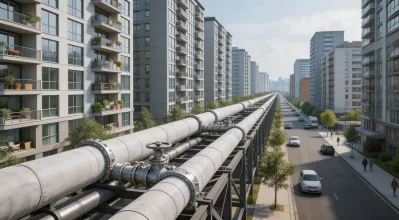
Large-scale water-source heat pumps integrated into district heating grids. Ideal for municipal and campus-wide heating where centralized systems reduce the marginal cost per kWh of heat through shared infrastructure and higher part-load efficiency.
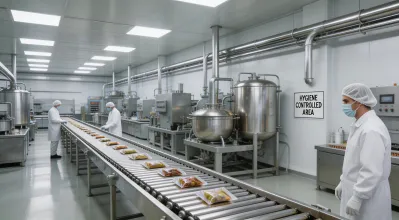
Process heating, hot water generation, and heat recovery for food manufacturing. Heat pumps recover waste heat from refrigeration systems to provide free hot water at 60-80 degrees C.
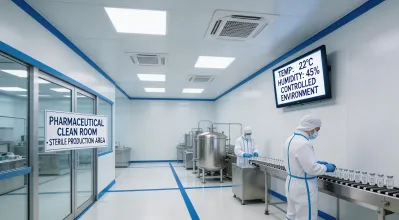
Precise temperature and humidity control for drug manufacturing, storage, and clean room environments. Redundant heat pump systems ensure compliance with GMP temperature requirements.
Heat recovery from server cooling for district heating integration. Capture waste heat at 30-40 degrees C and boost it to usable temperatures with high-efficiency heat pumps.
Simultaneous heating and cooling for guest rooms, pool heating, and domestic hot water. Air-source heat pumps provide year-round comfort with lower carbon footprint than traditional boiler systems.
Choosing the right heat pump involves trade-offs across refrigerant type, system architecture, and source configuration. Here are the two decisions that most influence project outcomes.
The Kigali Amendment and EU F-Gas Regulation (revised 2024) are accelerating the phase-down of high-GWP HFCs. Two competing pathways have emerged, each with legitimate engineering arguments:
GWP of 3 or less. No patent dependencies, lower long-term operating costs. R-744 transcritical systems are increasingly viable even in warmer climates above 35 degrees C ambient. However, R-290 is flammable (A3 classification under ISO 5149), limiting charge sizes in occupied spaces. R-717 is toxic and requires specialized ventilation and leak detection in machine rooms.
Drop-in compatible with many existing HFC systems, reducing retrofit costs by 30-50% compared to natural refrigerant conversions. No flammability concerns for R-1234ze(E) (A1 classification). However, higher refrigerant cost per kilogram, patent-protected supply chains, and emerging questions about PFAS decomposition byproducts in atmospheric breakdown.
Dimplex offers systems compatible with both pathways. Our engineers help you evaluate site-specific factors — charge limits, ventilation requirements, local codes, and total cost of ownership — before recommending a refrigerant platform.
This is the most frequent design decision in commercial heat pump projects. Neither option is universally superior — the right choice depends on site conditions, load profile, and budget horizon.
Lower installation cost (no cooling tower, no ground loop). Zero water consumption. Simpler permitting in most jurisdictions. COP range of 3.0 to 4.8 depending on ambient temperature. Performance degrades below -10 degrees C ambient, requiring supplemental heating in cold climates. Sound levels of 62-75 dB(A) at 1m may require acoustic mitigation in noise-sensitive areas.
Higher COP of 4.2 to 5.5 due to stable source temperatures. Lower operating cost over a 15-20 year lifecycle. Preferred for large installations above 500 kW and applications requiring simultaneous heating and cooling. However, upfront cost is 40-60% higher due to ground loops, boreholes (100-150m depth), or open-loop water treatment systems. Regulatory permits for groundwater extraction add 3-6 months to project timelines.
Our energy modeling service runs both scenarios side by side, comparing 10-year and 20-year total cost of ownership with your actual utility rates and load profile.
A structured approach to finding the right heat pump for your facility.
We review your facility layout, current heating system, energy consumption data, and operational requirements.
Our engineers build a thermal model of your facility and simulate heat pump performance across seasonal load profiles.
We specify the optimal heat pump type, capacity, and configuration with a detailed payback calculation.
Our technicians install, test, and commission the system, then train your team on operation and monitoring.
Our solutions engineers are available for a free, no-obligation consultation. We will help you evaluate options and provide a custom recommendation within 48 hours.
Schedule a Free Consultation